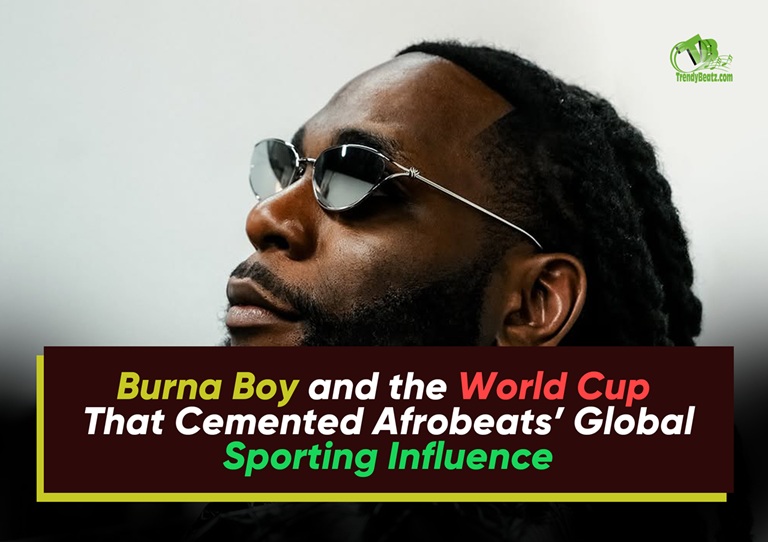
Burna Boy and the World Cup That Cemented Afrobeats’ Global Sporting Influence
From Ricky Martin's "The Cup of Life" to Shakira's "Waka Waka," music has become one of FIFA's most enduring traditions. But for years, African artists largely remained contributors on the sidelines, appearing as featured guests rather than defining voices of the tournament itself.
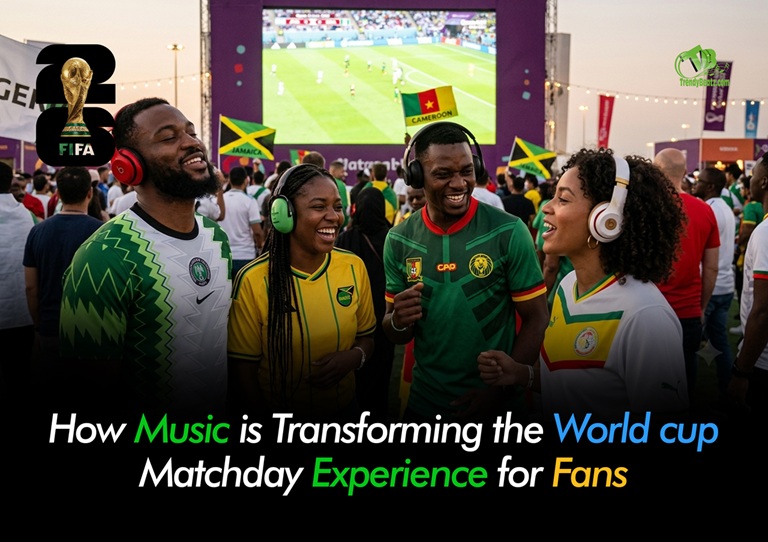
For all the footballing drama that defined the 2026 FIFA World Cup, the tournament also told another story, one that unfolded through speakers rather than scoreboards. While Spain lifted the trophy and Lionel Messi bid farewell to the competition, African music quietly occupied some of the tournament's biggest stages, with Burna Boy standing at the centre of that cultural shift.
The relationship between football and music has always been inseparable. World Cups are remembered as much for their anthems as their finals.
That balance continues to change. At the 2026 World Cup, Burna Boy wasn't simply another performer attached to a FIFA event. He became one of the tournament's defining musical figures, helping soundtrack football's biggest spectacle through multiple landmark appearances.
His collaboration with Shakira on Dai Dai, one of the tournament's flagship songs, quickly became a phenomenon. The record debuted atop the Billboard Global 200, becoming the first official FIFA World Cup song to achieve the feat. Its commercial success mirrored the tournament's global reach, with tens of millions of streams within days of release, followed by another surge as the competition reached its climax.
Numbers alone tell only part of the story. For over a decade, Shakira has become almost synonymous with FIFA. Waka Waka (This Time for Africa) remains one of the most recognisable World Cup songs ever recorded, while La La La (Brazil 2014) further cemented her place in football's musical history. Sharing that platform with one of the competition's most recognisable musical ambassadors was another statement about Afrobeats' expanding influence.
The symbolism became even stronger away from streaming charts.
When Burna Boy stepped onto the stage at the tournament's Opening Ceremony before more than 80,000 spectators, he became the first African artist to perform at that event. Weeks later, history repeated itself when he returned for the inaugural FIFA World Cup Final Halftime Show, another first for an African musician.
Together, those appearances transformed him from a guest performer into one of the defining faces of the tournament's entertainment. His presence throughout the competition also reflected years of steadily expanding influence rather than a sudden breakthrough.
Long before arriving at the World Cup, Burna Boy had already become one of Africa's most successful touring artists, selling out iconic venues including London Stadium, Madison Square Garden and Stade de France. In 2023, he became the first African artist to headline the UEFA Champions League Final Kick Off Show, demonstrating that football's biggest occasions were increasingly embracing African music.
The World Cup became the latest, and perhaps biggest, chapter in that progression. Still, this wasn't a tournament carried by a single artist.
Across FIFA's official soundtrack, African voices featured more prominently than ever before. South Africa's Tyla, Nigerian stars Ayra Starr and Rema, and Burna Boy formed part of a lineup that reflected contemporary global music far more accurately than in previous tournaments.
That wider visibility mirrors the trajectory Afrobeats has followed over the last decade. Davido helped usher African pop into FIFA's modern era through Hayya Hayya, one of the official songs for Qatar 2022, before returning for the 2026 World Cup Countdown Concert.
Rema has performed on stages such as the Ballon d'Or ceremony, while Tems has expanded African music's sporting footprint through appearances at the NBA All-Star Game, Formula One events and the inaugural FIFA Club World Cup Final Halftime Show.
Collectively, those moments have shifted African music from occasional representation to consistent presence across global sporting spectacles. Perhaps fittingly, the rise of African music coincided with one of the continent's strongest footballing tournaments.
Morocco reached another World Cup quarter-final, becoming the first African nation to achieve consecutive last-eight appearances. Egypt recorded their first-ever World Cup knockout victory, while Cape Verde emerged as one of the competition's surprise packages.
As African football continued pushing new boundaries on the pitch, African music was making similar advances beyond it.
Both stories spoke to the same broader reality: Africa is no longer simply participating in global culture; it is increasingly helping define it.
When the final whistle blew in New Jersey, Spain departed as world champions. Burna Boy left having achieved something different but equally significant.
Through chart-topping records, groundbreaking performances and an unmistakable presence across the tournament, he helped position Afrobeats not as an accompaniment to football's biggest event, but as one of its defining sounds.
The trophies may belong to Spain, but one of the World Cup's lasting cultural victories belonged to African music. And once again, Burna Boy stood at the forefront of it.
Source: TrendyBeatz