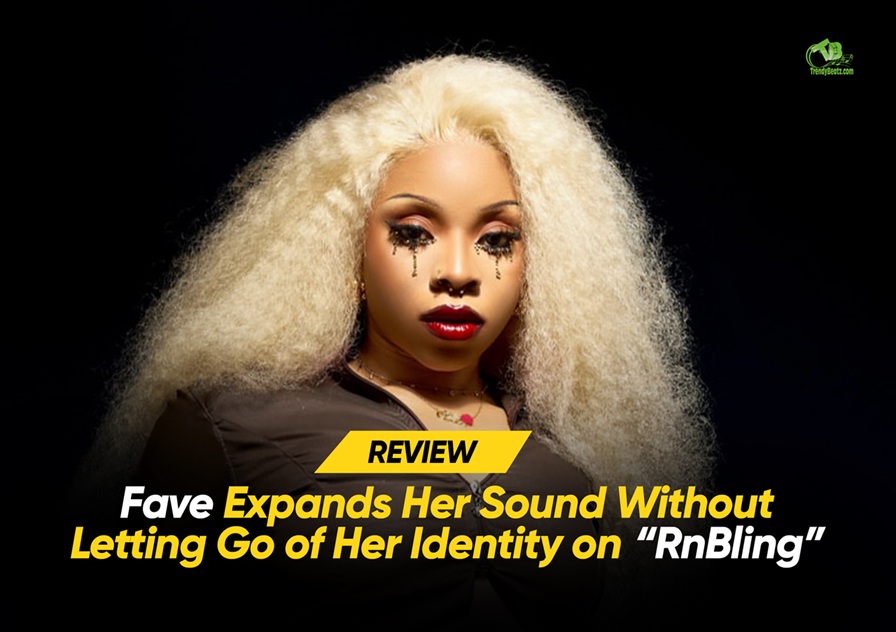
Review: On “RnBling” EP Album, Fave Expands Her Sound Without Letting Go of Her Identity
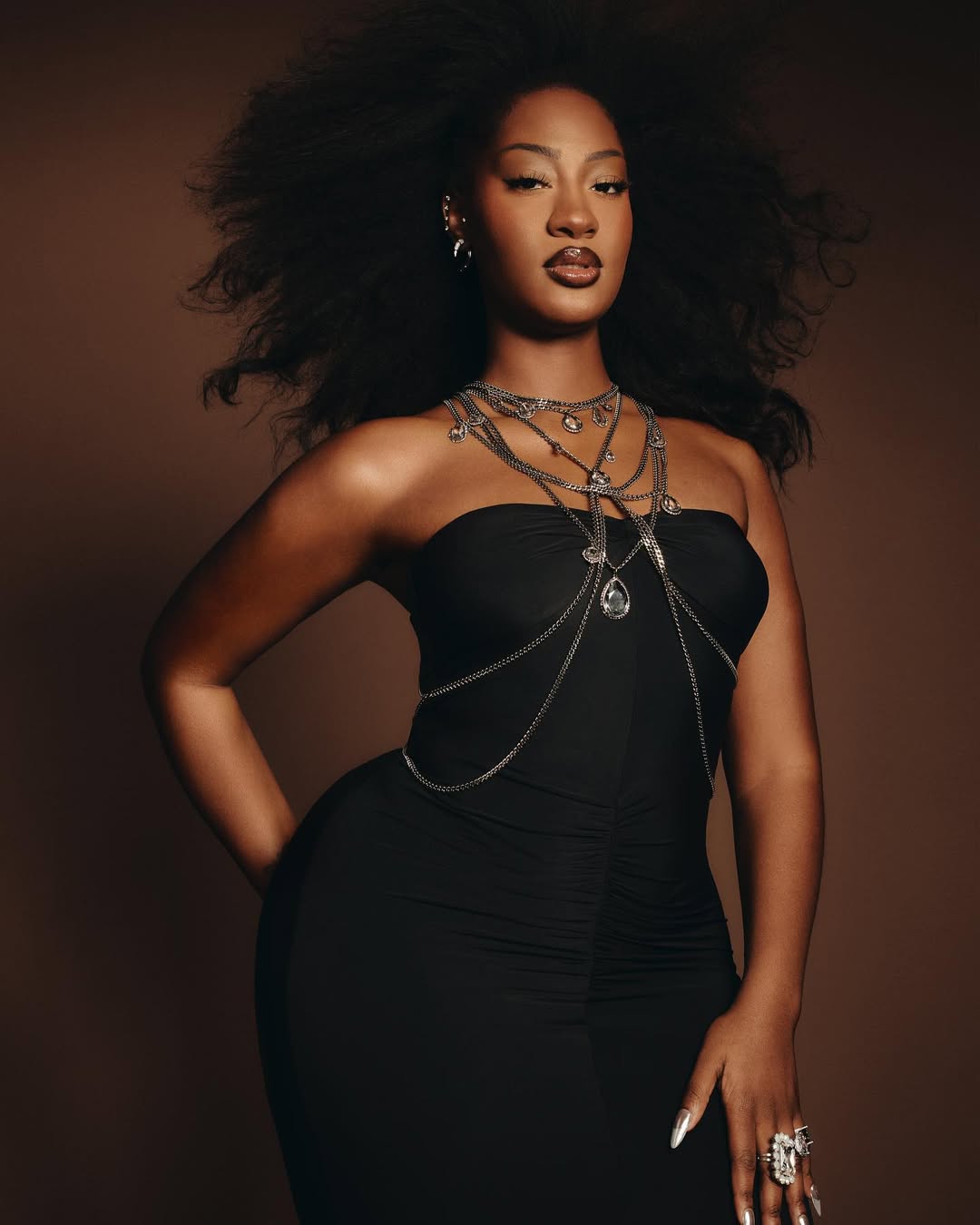
RnBling EP Album feels like that attempt. Instead of remaining within the comfortable mid-tempo territory that has long defined much of her catalogue, Fave broadens her sonic palette considerably.
When Fave emerged with "Baby Riddim" in 2021, it felt like Nigerian music had discovered a vocalist capable of occupying a lane almost entirely her own. Her smoky vocal tone, effortless melodic instincts and subtle Caribbean inflexions distinguished her from many of her contemporaries.
She possessed the intimacy of an R&B singer while remaining adaptable enough to glide across Afrobeats, Dancehall and Afro-Fusion production.
Yet commercial momentum can be fleeting. Despite releasing Riddim 5 at the height of her breakout moment and returning with another EP two years later, neither project generated the sustained excitement many expected. That never reflected a lack of ability. Rather, it suggested an artist still searching for the project that fully captured both her vocal strengths and her artistic ambitions.
House music, Jersey Club, Dancehall, Afro-Bashment and contemporary Afropop all find space across the project. The experimentation never feels forced, however, because her voice remains the constant thread tying everything together. Regardless of how energetic or electronic the production becomes, the songs are unmistakably hers.
The EP begins with "Body Talk," arguably its boldest production choice. Built around an infectious Jersey Club rhythm, the record immediately signals that Fave is interested in movement as much as melody this time around. The lyrics revolve around physical attraction rather than emotional complexity, but the decision works because the production is clearly designed to drive the experience. Instead of overcrowding the instrumental with excessive writing, she allows the rhythm to breathe while layering smooth melodies over its restless pulse.
"Miss You" shifts the emotional focus almost instantly. Featuring Chike, the song explores longing and emotional absence, with both singers trading affectionate performances that naturally complement one another. Their voices share a warmth that makes the duet convincing, even if the Amapiano-inspired production never quite reaches the same standard. The scattered log drums occasionally distract from what is otherwise one of the EP's strongest vocal performances.
Fave returns to more familiar territory on "Dance." Afro-Bashment has long suited her vocal style, and the song reminds listeners why. Driven by lively percussion and infectious grooves, it finds her comfortably navigating romantic desire with confidence and ease. There is little reinvention here, but not every record needs one. Sometimes an artist simply benefits from leaning into the sound that first showcased their strengths.
If "Dance" represents familiarity, "Drown" pushes forward again. The production embraces bright House influences with expansive electronic textures that create one of the project's richest sonic environments. Against this backdrop, Fave delivers one of her most emotionally convincing performances, portraying someone exhausted by a relationship that has reached its natural conclusion. Rather than pleading for reconciliation, she wrestles with the temptation to return while recognising that some endings cannot be undone. The emotional restraint makes the record even more compelling.
The project's biggest moment arrives with "Paparazzi," where Fave teams up with Yemi Alade for a vibrant Dancehall collaboration. The pairing feels inspired. Both artists understand the rhythmic demands of the genre and approach it with effortless confidence. More importantly, the song offers a welcome thematic shift. After several records centred on love, heartbreak and vulnerability, "Paparazzi" embraces swagger, confidence and self-assurance. The chemistry between both performers injects fresh energy into the EP's second half while adding welcome variety to its narrative.
"La La La" immediately softens that confidence. Here, Fave lowers her emotional guard, choosing reconciliation over resistance. The writing captures someone willing to meet a partner halfway despite previous disappointments, giving the song an intimacy that contrasts beautifully with the exuberance of its predecessor. Although the repetitive chorus occasionally limits its emotional impact, the sincerity of the performance ultimately carries the record across the finish line.
Taken individually, the songs explore familiar themes of romance, desire, vulnerability and emotional uncertainty. Collectively, however, they reveal something more interesting. RnBling is less concerned with reinventing Fave as a songwriter than with expanding the environments in which her songwriting exists. Evolution occurs primarily through production rather than subject matter.
That approach proves largely successful because Fave never loses sight of what made audiences gravitate towards her in the first place. Her voice remains the project's greatest strength. Whether navigating electronic House production, Caribbean rhythms or stripped-back Afro-Fusion, she consistently delivers melodies with remarkable control and emotional clarity.
The EP's title arguably undersells its ambition. While R&B remains central to Fave's artistic DNA, this project reaches far beyond the genre's conventional boundaries. Dance music, Afropop, Jersey Club and Dancehall all play equally important roles in shaping its identity. Rather than abandoning her roots, Fave uses them as a launching pad for broader experimentation.
RnBling may not completely redefine who Fave is as an artist, but it represents meaningful artistic progression. It shows a musician becoming increasingly comfortable taking creative risks without sacrificing the qualities that first made her distinctive. If this project signals the direction of her future work, Fave appears to have found the balance between artistic growth and sonic identity that has long felt within her reach.
Source: TrendyBeatz