France’s Relentless Machine Leaves Morocco Chasing Shadows
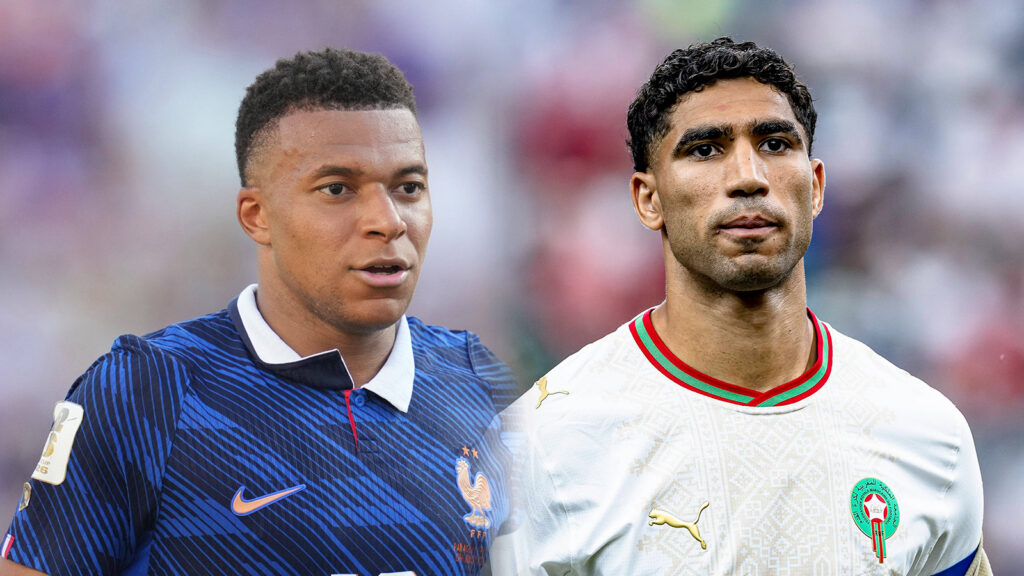
France booked their place in the 2026 FIFA World Cup quarter-finals with a composed 2-0 victory over Morocco, proving once again why they remain among the tournament favourites.

There are teams that overwhelm opponents through possession. Others suffocate games through defensive discipline. This French side has found a more devastating balance. They overwhelm without monopolising the ball, dictate without slowing the game down and, perhaps most frighteningly, possess an ability to manufacture decisive moments even when the football isn’t flowing as freely as it should.
Morocco discovered that reality in painful fashion. The scoreline may suggest a relatively comfortable 2-0 victory, but it hardly captures the psychological weight France exerted over 90 minutes. Morocco entered the Round of 16 believing they could recreate the resilience that carried them to the semi-finals four years earlier. They defended with commitment, remained compact and relied on one of the tournament’s finest goalkeepers in Yassine Bounou. Yet, for long stretches, they looked less like a team trying to win and more like one trying to delay the inevitable.
That is becoming France’s greatest weapon. Didier Deschamps’ side no longer needs to dominate every statistic to dominate football matches. Instead, they create an atmosphere where mistakes feel unavoidable. Their coordinated pressing compresses space so effectively that opponents begin abandoning ambitious build-up play altogether. Morocco wanted to progress through controlled possession, but France simply refused to let them breathe.
Every misplaced pass invited another wave. Every attempted escape was immediately closed down. By the midpoint of the first half, Morocco had effectively retreated into survival mode.
The match’s first defining moment arrived when Désiré Doué robbed Achraf Hakimi high up the pitch before releasing Kylian Mbappé, whose acceleration once again forced panic inside the Moroccan penalty area. Noussair Mazraoui had little option but to bring him down.
The resulting penalty appeared straightforward, but an unusually lengthy VAR review interrupted the rhythm of the occasion. More than three minutes elapsed before Mbappé eventually stepped forward, only to produce an uncharacteristically tame effort that Bounou comfortably pushed away.
For a brief moment, the miss appeared capable of shifting momentum. Bounou, already regarded as one of international football’s finest penalty stoppers, suddenly looked capable of producing another unforgettable World Cup performance. He denied Dayot Upamecano from close range, reacted sharply to keep out Doué’s low effort and watched Lucas Digne thunder an effort against the crossbar.

Yet the growing list of saves masked a deeper problem. France were creating opportunities at an unsustainable rate.
Before Morocco registered their first attempt on goal, Les Bleus had already accumulated 13 shots. Although the finishing lacked its usual precision, the territorial dominance remained overwhelming. Morocco’s attacking ambitions gradually disappeared beneath the constant defensive workload demanded of them.
Unlike the exhilarating displays that dismantled opponents earlier in the tournament, France were not playing with complete fluency. Some crosses drifted beyond their targets, combinations occasionally broke down and several promising attacks lacked their customary polish.
But elite tournament teams rarely require perfection. History repeatedly shows that champions often evolve as competitions progress. The sparkling performances that define group stages frequently give way to controlled, pragmatic victories in the knockout rounds. France appear to be entering precisely that phase.
Even when rhythm deserts them, superiority remains. And then there is Mbappé.
World football has produced countless great forwards capable of deciding matches through goals alone. Mbappé belongs to the smaller category of players capable of altering the emotional temperature of entire contests.
Having endured the disappointment of his missed penalty, lesser players might have drifted towards frustration. Instead, he continued demanding possession, stretching Morocco’s defensive shape and forcing defenders into impossible decisions. His breakthrough embodied precisely why he remains football’s most terrifying attacking weapon.

Receiving possession on the edge of the area with defenders surrounding him, Mbappé required barely a fraction of space to unleash an unstoppable finish beyond Bounou. It was the type of goal that tactical systems cannot fully prevent, arriving through extraordinary individual brilliance rather than structural superiority.
Morocco’s disciplined resistance evaporated almost instantly. Once behind, they were forced to abandon the conservative shape that had kept them alive. The additional spaces suited France perfectly. The second goal arrived soon afterwards.
Again Mbappé was central, attracting defenders before creating the opening for Ousmane Dembélé, whose curling finish squeezed beyond Bounou despite the goalkeeper managing to get a hand on the effort. Mazraoui, attempting desperately to recover, inadvertently screened his own goalkeeper’s vision, turning an already difficult save into an almost impossible one. Two moments. Two goals. The contest was effectively over.
Perhaps the most impressive aspect of France’s performance was not the quality of the goals but the control that followed them. Rather than chasing further headlines, Deschamps withdrew key players, including Mbappé, preserving energy for the quarter-finals while maintaining complete authority over proceedings.
It reflected the confidence of a team thinking beyond individual matches.
Morocco deserve considerable credit for refusing to abandon their principles entirely. Even under sustained pressure, they continued attempting to construct attacks patiently whenever opportunities emerged. Their defensive organisation remained admirable, while Bounou once again demonstrated why he has become one of the world’s most dependable goalkeepers. But organisation alone rarely defeats exceptional teams.
The margins separating elite international sides continue to shrink with every passing tournament. Increasingly, knockout football is determined not by tactical superiority but by moments only the very best players can produce. France possess several of those players.
More importantly, they have constructed a collective capable of amplifying individual brilliance rather than depending entirely upon it. Their pressing functions as one unit, their transitions arrive with ruthless efficiency and their attacking depth ensures threats emerge from multiple directions. That combination makes them exceptionally difficult to prepare for.
There remains, of course, a long road between the Round of 16 and lifting the World Cup. Spain, Belgium and several other contenders possess enough quality to expose weaknesses that Morocco could not. France themselves have looked more clinical than spectacular during the knockout phase. Yet tournaments are rarely won through spectacle alone.
They are won by teams capable of solving different problems against different opponents. Against Morocco, France demonstrated patience when early chances were missed, resilience after a costly penalty failure and clinical precision once opportunities finally arrived.
Those are championship qualities. If their performances continue to combine collective organisation with the unpredictable genius of Kylian Mbappé, stopping France from reclaiming the World Cup may require far more than discipline and determination. It may require something extraordinary.
Source: TrendyBeatz