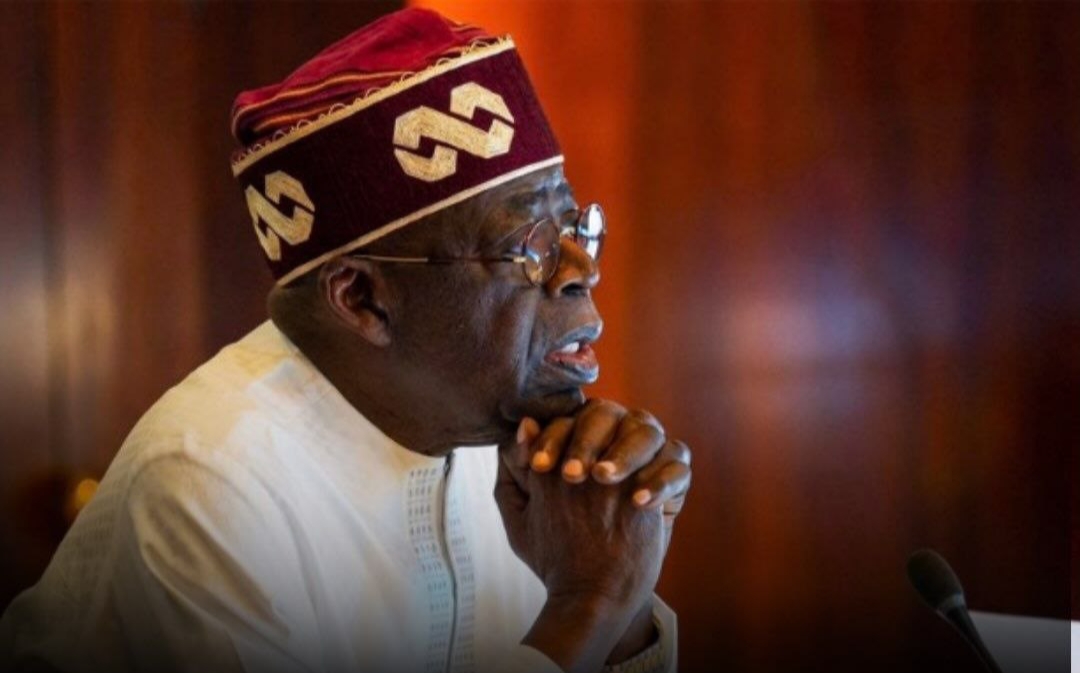
President Tinubu Asks US Court to Block Release of FBI, DEA Records Linked to Old Drug Allegations
President Bola Tinubu has filed a legal challenge in a United States federal court seeking to prevent the release of records held by the FBI and DEA linked to historical investigations and a 1993 civil forfeiture case, arguing that disclosing the documents would violate his privacy rights.
President Tinubu Asks US Court to Block Release of FBI, DEA Records Linked to Old Drug Allegations

The request, filed on August 28, 2026, by Tinubu's legal team comprising Christopher W. Carmichael, Victor P. Henderson, and Oluwole O. Afolabi, is part of a long-running Freedom of Information Act lawsuit brought by American transparency activist Aaron Greenspan.
Greenspan, who operates the website PlainSite.org, has been seeking documents from several US agencies, including the FBI's entire file on Tinubu and Form 302 interview records from 1992 to 1993.
The case also concerns records connected to a 1993 civil forfeiture proceeding in the US involving about $460,000 linked to Tinubu, who has consistently denied any wrongdoing.
Tinubu's 16-page court filing argues that the release of the requested records could infringe on his privacy rights, maintaining that the earlier forfeiture proceedings did not make the details of any possible criminal investigation public.

His lawyers cited the US Supreme Court's 1989 decision in Reporters Committee to argue that an individual retains a privacy interest in investigative files even when "scattered" information from the same matter has previously appeared in public records.
"Regardless of the prior disclosure in the forfeiture proceeding, Intervenor retains a privacy interest in potential disclosure of the investigative files sought by Plaintiff," the filing stated.
The latest development comes after US District Judge Beryl Howell ruled in April 2025 that the FBI and DEA could no longer rely on so-called "Glomar" responses, under which agencies refuse to confirm or deny the existence of requested records.
The ruling did not establish that Tinubu committed a drug-trafficking offence or amount to a criminal conviction against him, but rather concerned the agencies' obligations under FOIA.
The FBI has also asked the court for permission to submit sensitive information privately and under seal, warning that releasing some records could endanger the lives or physical safety of individuals.

The case has taken on a political dimension in Nigeria, as the records are being sought ahead of the 2027 presidential election, where Tinubu is seeking a second term.
Greenspan's requests include documents concerning a federal narcotics investigation dating to the late 1980s and early 1990s, which have been cited by Tinubu's political opponents as evidence of alleged links to narcotics trafficking.
However, legal analysts note that the 1993 forfeiture was a civil in rem proceeding against property rather than a criminal in personam conviction, meaning Tinubu was never charged, tried, or convicted of a crime.
As the court prepares to determine whether the FBI and DEA may retain their redactions or whether further records must be released, Tinubu's legal team is urging the court to deny Greenspan's motion for summary judgment and uphold the agencies' withholdings.
The case is expected to continue as the court weighs the balance between transparency and privacy rights under US law.
For now, Tinubu has directly intervened in the dispute, placing himself at the centre of the legal battle over whether additional records concerning the historical investigations should become public.
Source: TrendyBeatz