Dangote Urges Wealthy Nigerians To Build Factories Instead Of Buying Expensive Private Jets
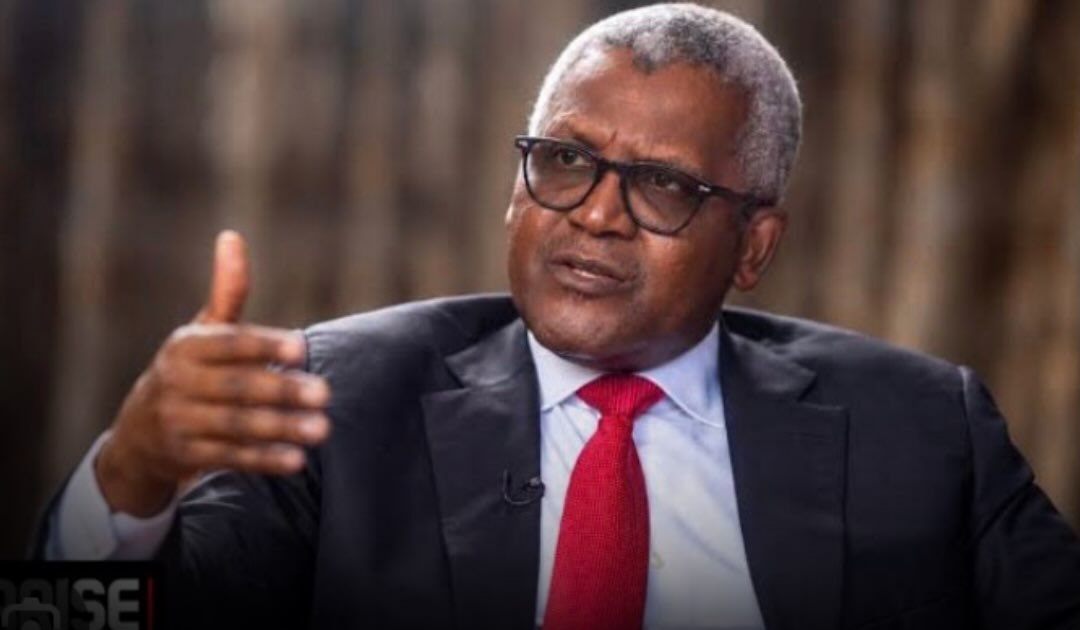
Billionaire businessman Aliko Dangote has reflected on his early success and urged wealthy Nigerians to put more money into productive investments rather than spending huge sums on luxury assets such as private jets.
Dangote Urges Wealthy Nigerians To Build Factories Instead Of Buying Expensive Private Jets

Africa’s richest man, Aliko Dangote, has revealed that he acquired his first private jet at the age of 22 and a half, but says he has reached a stage where he is comfortable travelling on commercial flights when necessary.
Dangote made the remarks while speaking about his journey as a businessman and the way his attitude towards wealth and luxury has changed over the years.
His comments came as his Dangote Petroleum Refinery and Petrochemicals commenced its much-anticipated initial public offering, giving investors an opportunity to acquire shares in the massive industrial project.
Recalling his early years in business, Dangote said he had experienced the kind of success that allowed him to own a private jet at a very young age. However, he stressed that he is no longer concerned about always travelling privately and would have no problem using commercial flights. “I was telling somebody that right now, I don’t mind.
I can take commercial, I can take anything. I had my first private jet at 22 years and a half,” he said. His statement was particularly striking because it came from one of Nigeria’s wealthiest businessmen, showing that he does not consider private aviation an essential measure of success at this stage of his career.
Dangote went further by questioning the priorities of wealthy Nigerians who spend tens or even hundreds of millions of dollars on private aircraft. Rather than criticising people simply for becoming wealthy, he encouraged those with substantial financial resources to consider how their money can contribute to production, employment and economic activity.
He pointed to the possibility of investing the kind of money required to purchase a $90 million or $100 million aircraft into businesses that can create jobs and expand productive capacity in the country.

He illustrated his point with an experience in Abuja, where he said he spent about 30 minutes looking for a parking space.
The experience prompted him to reflect on the number of private jets in the Nigerian capital and what the country could look like if more of the money behind those luxury assets went into factories. “I wish this place was full of factories, not private jets,” he said. The remark captured the central message behind his argument: Nigeria needs more people investing in industries that produce goods, employ workers and generate long-term economic value.
Dangote’s comments also fit closely with his own business history. His wealth has been built around large-scale industrial investments rather than simply holding luxury assets, with his business interests spanning areas such as cement, food production, fertiliser and petroleum refining.
The Dangote refinery, in particular, represents the kind of capital-intensive project he is encouraging other wealthy Nigerians to consider when deciding how to deploy their money.
His comments are therefore less about telling wealthy Nigerians that they should not enjoy their money and more about challenging the culture of conspicuous spending among people with the financial capacity to make much bigger investments.
Dangote himself acknowledged that he once enjoyed private aviation, but his current position is that wealth can be used for something much bigger than personal convenience.
At a time when Nigeria continues to search for more productive investment, his message is that more factories and businesses could ultimately do far more for the country than another expensive private jet sitting at an airport.
Source: TrendyBeatz